The web hosting market is a competitive one and If you experience regular downtime on your website, you should consider changing your web hosting provider. Choosing your web hosting provider can determine the stability of your website. However, before selecting a web hosting company, ensure you do your homework because there are many web hosting companies worldwide. Therefore, evaluating every web hosting company is very important before you make a choice.
This will help you find a web hosting company whose services have been tested by others. Also, consider factors such as the license of the chosen web hosting company. Finally, you need to realize that you will have to pay to rent the services of the first web hosting company you visit. Therefore, a great way to find the best web hosting company is to use references from colleagues. In this article, I’ll provide you with tips to select an appropriate one based on your specific needs.
Let us see the tips for choosing the highest-rated web hosting provider.
Skills and experience
First, consider the skills of your chosen web hosting company. You should use the services of a highly experienced web hosting company. You can learn about their skills by evaluating the track record of the selected web hosting company. The reliability of the services offered by a particular web hosting company depends on its experience level. Therefore, checking the experience level of the chosen web hosting service provider is also important. Be sure to use the most experienced web hosting company. If possible, select a web hosting company with at least five years of experience.
Reputation
Second, consider the reputation of the web hosting company. It is advisable to select a reputable web hosting company. A rating of the online reviews of the chosen web hosting company will provide you with important information regarding the reliability of their services. This will enable you to understand the strengths and weaknesses of the selected web hosting company. Knowing the opinions of a web hosting company’s past clients allows you to make the right decisions. You can avoid working with a web hosting service provider with many negative reviews.
Cost estimate
Finally, consider the cost estimates for a particular web hosting service provider. During the decision-making process, check the prices of each web hosting company. This will allow you to choose the most affordable web hosting service provider. However, before evaluating the approximate cost of a particular web hosting company, make sure you know how other people will rate their services.
Who provides the best web hosting services?
AccuIT provides business-class web hosting services. Reliable and scalable business-class hosting solutions will increase your organization’s network uptime. Our data centers for organizations requiring Canadian hosting are in Canada. If your company needs secure and reliable web hosting, please contact us.
A continuous backup system updates changes to your live data in real-time. You can maintain an updated sample of your data and get increased protection with this type of backup.
Constant data protection means that all the data on your computer is backed up every time you make changes. So, you can store a continuous history of changes made to any document and restore the system with incredible accuracy if you use this method. All backups are duplicated multiple times and saved in a journal file with any changes. The reasons to maintain your data safely for your business are described below:
1. It can help you to recover after a disaster
Disaster recovery requires ongoing data protection. Continuous data protection backup storage can be copied multiple times to an external data storage facility to protect data from destruction. As a result, disaster recovery enables companies to recover software and data quickly and effectively if they fail.
2. Records numerous data variations
Data backup keeps multiple copies of each file, depending on the initial changes. With different data protection software, users can retrieve data anytime in the past. Thus it prevents you from accidentally deleting or damaging documents.
3. Continuous data synchronization
You have a constant flow of data syncing, so you never lose data even if the system fails. If your system fails, you don’t have to spend time debugging. You can access your information without losing any points.
4. Data transfer
The ability to transfer data across different application programs is known as data mobility. Cloud computer applications allow users to share data and applications with service providers. This data can be used to complete data backup and security. Backups have historically been seen as an essential component of a general data security plan.
5. Protection against computer viruses and ransomware
Implementing a continuous data protection system can effectively protect against computer virus infections and the potentially harmful effects of ransomware attacks. If a computer virus enters a computer system, it can damage data files and cause the operating system to malfunction.
Furthermore, when a computer virus infects a computer, the integrity of the stored data is compromised, and a reliable file copy is no longer left. It can encrypt your computer data and make it readable. If this happens, your data file redundancy will be useless. We need a reliable data backup plan that prevents continuous data saving and malware attacks to avoid this situation.
6. Customer satisfaction will skyrocket
Another benefit of a continuous data security system is that it can enhance your company’s reputation and increase the trust of your existing customers. The general public sees the ability to maintain critical data and sensitive customer information as an undisputed force. That’s why service members and customers constantly check and find indicators of data protection in cloud backup solutions.
7. Protection against hardware and software failures
Here, we will discuss the computer hardware components, such as hard disk drives built into a computer system. You cannot save data on a computer without a functional hard drive, a desktop computer, or a laptop. If the hard disk drive installed in the computer fails, there will be no data to recover. Therefore, you should always have a backup policy when maintaining essential data files and documents that provide critical information to users, as hard drive failure can happen at any time.
This situation often occurs because today’s computer systems use serial advanced technology attachment (SATA) hard drives instead of solid-state drives (SSDs). However, you can create an effective data recovery system if you have an ongoing data protection system that stores data on off-site servers.
8. Large amounts of computer data storage space
The most obvious benefit of implementing a continuous data protection system in online backup services is to save a large amount of computer data storage space. This advantage is made possible by the ability of a continuous data protection system to perform an enhanced backup method.
You will need more computer data storage space if you keep changes to the documents stored in the cloud backup system. However, no more computer data storage space is required if there is no change. As a result, you’ll be using data storage space because you’ll only need one complete backup operation on the incremental backup.
9. Improves the performance of the server
Server performance is greatly improved because continuous data protection works by performing full backups and incremental backups depending on the changes seen in the data files. After all, incremental backups use less bandwidth throughout the process. In addition, it does not overload the entire network connection, which is very useful for backup operating companies.
Since workers rely heavily on the Internet connection to complete their day-to-day work, running an incremental backup process at the same time will not compromise their regular work schedule as well as their efficiency and productivity. As a result of continuous data security, there will be no problems or delays in business productivity.
Regardless of this, if both the Internet connection and the server connection are not overburdened, we can ensure that any saved data can always be accessed and backed up. There will be no time for rest. With continuous data protection protocols, backing up files and other data will also be faster. You need not wait to get a backup because it is unnoticed due to the minimum bandwidth requirement during the process.
Conclusion
Web services and applications in modern enterprises rely heavily on data. Data can be recovered quickly with continuous data protection measures if something goes wrong. Your data could be compromised if you do not take action. Take immediate action to protect your data. Application development partners can help you choose the best data protection solution that works for your business. Keep in mind the above information to ensure that this investment is vital for your business and pays off in the long run.
Who provides the best data backup and recovery services?
We, AccuIT, cater to businesses by offering advanced backup services at an affordable price. We back up all of your data to a certified and secure data center in Canada without burdening your pockets. Call us today!
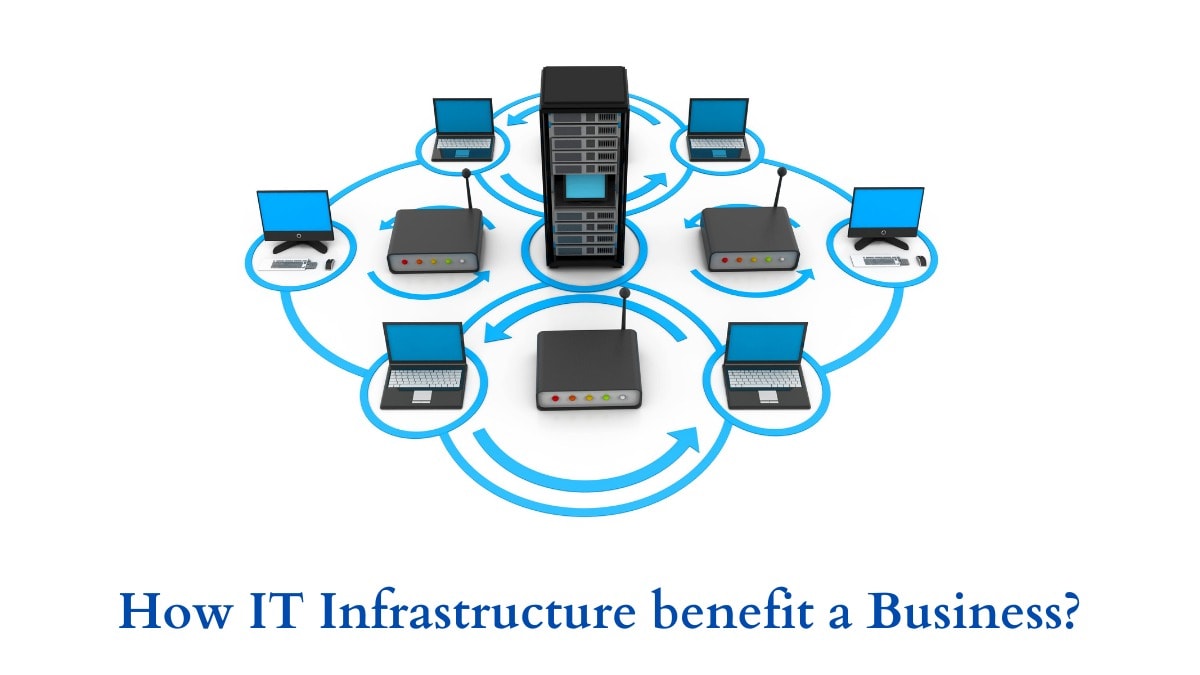
Information technology infrastructure can be defined as the resources required to operate and manage an organization’s software, hardware, network services, and IT environment. IT infrastructure development is usually an internal aspect of the organization. It enables it to provide IT infrastructure solutions and services to its customers, partners, and employees smoothly and hassle-free.
What are the three essential components of IT infrastructure for business?
HardwareThe hardware consists of the hardware components of the IT infrastructure, such as personal computers, data centers, switches, servers, routers, and all other equipment required to support the operation of devices and machines in the IT infrastructure. In addition, the facilities used to house, operate and cool the data center can also be considered part of the IT infrastructure.
Programming
Software refers to all the company’s applications to provide services to customers and for internal performance. These include web servers, operating systems (OS), content management systems, enterprise resource planning, productivity applications, etc. The operating system is the essential software that manages the hardware and connects the physical resources to the network ecosystem.
Network
Interconnected network components are required to establish external and internal connections between all equipment and parts of the IT infrastructure. In other words, a network contains all the software and hardware components needed to enable security, connect to the Internet, allows a network, and promote a firewall. So it significantly reduces the risk of data theft by ensuring that authorized employees have access to data transmitted and stored only through pre-determined and strictly monitored access points.
What are the seven areas of IT infrastructure?Let’s take a look at seven areas of IT infrastructure
User domain
As with the name, the user domain includes all end users who have access to the information within the organization.
Workstation area
Workstation domains include all devices, including computers used by end-users. It shows the way end-users interact with IT infrastructure.
LAN Domain
The LAN domain includes all components that make up the local area network, such as routers, hubs, workstations, Wi-Fi, switches, and access points.
WAN Domain
A Wide Area Network is a system that connects all devices over long distances. It has both semi-private lines and the Internet.
LAN-to-WAN domain
The LAN-to-WAN domain refers to the boundary where the LAN connects to the WAN (Internet). A firewall separates LAN and WAN areas.
Remote access domain
In remote access, a mobile user, such as a contractor, vendor, or employee, works remotely (without staying in the office) and accesses the company’s local area network remotely with the assistance of a VPN.
System/application domain
The system/application domain denotes the applications and technologies used to run the business. In addition, it contains user-accessible servers such as databases and emails.
What is IT Infrastructure Management?IT infrastructure management is the management of operational and technical components of IT infrastructure, like data, hardware, software, processes, policies, equipment, and facilities used to enhance business effectiveness. Due to its complexity, IT infrastructure management is further classified as Systems Management, Storage Management, and Network Management.
What is the job of IT infrastructure management?By lining up IT infrastructure management with business strategy, you can use technology to create value for the entire organization. Instead of managing each line of business individually, you can combine the management of all the various IT facilities, storage, applications, servers, security systems, and networks.
The best IT infrastructure management services aim to gain control and structure for the processes and functions responsible for various technical operations in both physical and virtual environments. In addition, it helps reduce duplication of effort, increase information flow, ensure compliance with industry regulations, reduce overall IT costs, increase business productivity, and reduce downtime.
What are the benefits of managed IT infrastructure services?IT infrastructure management offers several benefits to businesses:
Performance Boost
IT management involves monitoring systems and networks that lead to higher performance and reduce the likelihood of errors and outages. This concept allows for the early detection of system vulnerabilities and eliminates technical limitations, thus reducing downtime.
Increase productivity
By investing in technology to improve your IT infrastructure, you can ensure productivity growth for your business. IT infrastructure management outsourcing helps automate and simplify regular and critical processes and saves technicians time to focus on more strategic activities.
Flexibility and fitness
Effective IT management solutions allow you to use a holistic view of your computer environment, including cloud and virtual infrastructure and business flexibility.
Improve staff and customer experience
With the appropriate IT management tools, you can always be aware of the state of your IT environment and create a better and more meaningful experience for your employees and customers. In addition, you can remove any unexpected downtime and prepare end-users in advance for any scheduled downtime for maintenance purposes.
Cost savings
Setting up your IT infrastructure allows you to anticipate and deal with any disaster before it escalates. With this energetic approach of IT infrastructure solutions provider, you can significantly reduce downtime, reduce disasters, and save a lot of money by avoiding unforeseen expenses.
What are the challenges in managing IT infrastructure?
While IT management is vital for all businesses, IT professionals face many challenges in efficiently optimizing their IT infrastructure. Let’s consider some of the most common IT infrastructure management challenges:
Outdated systems and technologies
Due to the rapid development of technology, systems become obsolete very quickly. Because of this, you need to keep your system updated with the latest technological advances in the industry. Frequent upgrades of your hardware and software will help you increase productivity and efficiency and gain a competitive advantage over your peers.
Disruption of network and communication
Other significant challenges in IT management include faulty networks and poor connectivity issues. Therefore, it is crucial to constantly monitor network performance and focus on improving connectivity in the digital age. This idea will help keep your infrastructure management consistent in the modern era where customers are demanding more than ever, and you need to be at the forefront of your services to compete with your peers.
Data editing, storage, and management issues
In this digital age, data collection and editing have become more accessible, leading to an explosion of data volume. As a result, managing this large amount of data has become a significant challenge for businesses. In addition, losing data due to inadequate storage capabilities, including inefficient management, can be very costly for companies. Therefore, it is vital to devise a strategy that includes the need for more data storage and better data management.
Expansion restrictions
Scalability is one of the main concerns of companies aiming for effective IT management. Companies usually require IT scaling, but over-consumption can lead to a lot of waste if under-utilized. Therefore, you need to integrate with scalable infrastructure monitoring software to ensure your system is ready to adapt and acknowledge your evolving needs.
What are the best practices for managing IT infrastructure?
A well-functioning and efficient IT infrastructure is key to building a successful business in the digital age. Here is a catalog of best practices for improving IT infrastructure management:
Gathering knowledge and evaluating infrastructure
The initial step towards effective IT infrastructure management is to gather as much information as possible about the process and how it works for your business. One of the best ways to learn from experience and apply your knowledge to decide what your business needs and doesn’t need is to develop relevant information.
Set up clear standards and goals
Based on the knowledge gained in the first step, you can create management and operational standards. To suit your unique business needs, you need to customize the configuration and standards (such as safety standards). In addition to establishing these standards, it is also essential to ensure their consistent implementation.
Observe frequently
Constantly monitoring management and operating standards is an effective way to ensure it works for your business. This concept enables you to actively respond to and resolve system and network issues as they arise and prevent any unplanned outages.
Accurately document and communicate.
While many companies neglect to document their business IT infrastructure management configurations and standards, this is as important a step as any other best practice. You should keep thorough documentation of your IT infrastructure management process so that new IT professionals can join the service and speed up the process quickly and efficiently.
With so many solutions available in the IT landscape and more companies needing them, IT support is integral to every business venture. Enterprise software is becoming more sophisticated, and getting reliable technical support is one of the best ways to maximize the value of these applications.
Suppose you are looking for a dedicated IT resource team to deploy, secure, and manage your solutions and maintain a productive work environment for your company in general. In that case, you are on the right track. The only question left is: should your organization choose an in-house team or outsourced IT? We shall explore the pros and cons of both options so you can make informed decisions.
In-house IT supportPros
You can determine the technical qualifications and skill set you want to hire. Therefore, you can ensure that most of your needs are covered, especially if you already have a solid setup for your IT environment.
Your team will ensure they have an in-depth knowledge of your system and infrastructure and how you can integrate it into your business objectives. With a technical team, you can resolve any IT-related issues. If your organization has specific IT projects that require close monitoring and management, an in-house team will also be constructive.
Cons
IT employees’ average salary does not count the costs for their benefits, pension contributions, and ongoing training to update them with the new technology.
Another disadvantage of managing your own IT department is that it may not have the skills you can get from IT outsourcing. Of course, they will be familiar with the systems and solutions that cover your day-to-day operations, but if you come across something, not within their capabilities, it will prompt you to seek outside help.
Furthermore, if your team is fragile, say one to two people (in small businesses), they feel overwhelmed in maintenance tasks and solve software and hardware problems, leading to the dropping of large, more innovative projects.
Even if only two full-time members of the IT department had to spend significantly, some would argue that the most significant advantage of outsourcing IT support is its cost-effectiveness. Outsourcing your IT gives you the option of paying a flat monthly fee that is much lower than the employee’s salary or spending on the services you want to offer and the technology you need. On the other hand, while giving you a wide range of IT skills, you will not be able to enter with an in-house team.
Good external support can evaluate your infrastructure and actively identify issues with outdated hardware, problematic devices, and warranties in your IT environment. In addition, many IT support companies have a Service Level Agreement (SLA) that helps ensure high quality of service is maintained. Organized IT support can also provide consulting services to help you choose solutions to drive business growth and adapt to changing market or industry needs.
Cons
While you can agree on common goals and priorities with your managed service provider, it is different from the supervision of your employees.
The key is to find a reliable IT support company such as AccuIT with a proven track record of credibility and reliability.
Which type works best for whom?
Small and medium-sized businesses perform best by partnering with a managed IT services company for technical support. With this option, they will not have to hire a full-time IT professional, but they can still get professional IT support for their various concerns.
However, finding the best IT support for your business is not a one-size-fits-all solution. Many organizations have found that the hybrid approach – hiring IT professionals to perform routine tasks and outsourcing more specific needs – is ideal for them. Assess your strengths, weaknesses, conditions, and resources to find the best IT support for your organization.
Whom to contact for excellent IT support?
Your company’s computer systems, like most companies, require responsive and experienced IT support. You can’t wait for the final solution, but you can’t afford the extra cost of hiring an IT support person- this is where AccuIT’s contracted IT support services come into play.
AccuIT is your 24/7 IT support solution, with all your business needs skills.
The coronavirus pandemic has created a significant impact on the cybersecurity landscape. According to a survey, 61 percent of IT and security leaders report that they are concerned about increasing cyber-attacks targeting employees working from home. With cyber-attacks, data breaches on the rise across all industries, and remote work is now typical; businesses need to take the initiative to protect confidential information from digital intruders.
Covid-19 has created a new wave of cyberattacks.
Hackers are common to prey on victims after a disaster or high-profile event. These constant threats have changed the working class globally. Cyber-attacks come in many forms, from malicious domains and malware to ransomware attacks and phishing scams. Below is a brief look at some of the recurring cyber threats since the beginning of COVID-19.
Ransomware is becoming more and more popular.
Ransomware is malicious software that affects a computer and threatens to block or publish access to the victim’s data when the ransom is not paid.
Phishing emails seem more reliable.
Cybersecurity landscape phishing is a fraudulent attempt to obtain sensitive information such as usernames, passwords, or credit card details- This is achieved when the hacker shows up as a trusted organization.
Cybercriminals are taking advantage of the COVID-19 pandemic to trick users into clicking on malicious email links or passwords.
Malware is leading to more beaches.
Malware is any software deliberately designed to harm a computer, client, server, or network. There are several kinds of malware, such as computer viruses, Trojan horses, worms, spyware, rogue software, and adware. When individuals accidentally download malware to their system, they can be harmed, making it unreliable.
How to deal with cyber security threats during COVID-19
Cyber security threats can have a detrimental effect on businesses. Loss of data, corrupted files, and other costly incidents can lead to significant downtime and loss of business customer confidence. Companies need to learn how to deal effectively with cyber security threats during COVID-19.
Improve staff member awareness
The cyberattacks threat is always present in the cyber security landscape. Staff members should always be aware of cyber-attacks and take appropriate steps to prevent these security incidents. You should train the employees to detect phishing emails, avoid suspicious downloads, use suitable browsing methods, create strong passwords, and retrieve information from trusted websites. Business leaders should conduct mandatory and ongoing cyber security training to raise awareness about threats and reduce risks.
Ensure proper spam filtering
Employees need to use antivirus software and other protective tools that act as a barrier against cyber-attacks. Though employees are working from home, their computers must be equipped with antivirus and antispyware, and they must be updated regularly. All software vendors offer regular patches and updates to their products to improve performance and security issues.
Take full and partial backups regularly.
Regular partial or complete backups of business data can protect a business from significant losses if it encounters an unexpected cyber-attack. Restoring from a backup is more reliable and often less costly than paying criminals for an encryption key. However, the backup must be comprehensive and up-to-date.
Review our cybersecurity checklist for 2022.
Business leaders must take appropriate steps to protect their organizations from cyber incidents. Institutions should go through the cybersecurity checklist to ensure that their business is protected in 2022.
Talk to a professional cybersecurity consulting company such as AccuIT. Experienced leaders cannot predict cyberattacks, but they can prepare for such threats. Unfortunately, Covid-19 is expected to continue to impact the cybersecurity landscape for the foreseeable future, meaning organizations are still at risk. To learn more about avoiding cybersecurity threats during COVID-19 or speaking with a professional cybersecurity consulting firm, contact AccuIT today.
Hackers have discovered a new way to attack the corporate computer system through the devices of employees working at home due to the coronavirus epidemic. The threat is designed to take advantage of the vulnerabilities created by the increasing use of corporate virtual private networks (VPNs) and the elimination of personal verification.
The latest hacker campaign was launched and used voice phishing. Additionally, cybercriminals have launched phishing campaigns – with random targeting to gain access to employee tools across multiple companies – with the ultimate goal of gaining access.
Phishing has evolved into sophisticated and coordinated campaigns to obtain confidential and proprietary information and trade secrets through their VPN. Criminals have discovered this type with the help of company employees.
It’s harder to find safety when your employees have keystrokes. Cybercriminals removed the victim company’s clients’ information database to leverage hidden credentials in other attacks. The monetizing method may vary depending on the company, but they are very aggressive with a tight schedule between the initial breach and a disruptive cashout system.
VPNs are widely used in today’s remote work environment, and they aim to create a secure platform for remote employees to log in to their company’s network from home. Many companies use VPNs since they provide secure remote connections and allow the company to monitor the activities of employees on the web and detect potential security breaches.
How do scammers do this?
The cybercrime group sets a goal for the company and conducts extensive research on its employees. Attackers collect victim files of employees based on scraps of their virtual presence on social media.
The attacker can find out the employee’s name, location, place of work, position, company tenure, and even the employee’s home address from an employee’s social media profile.
After that, the hackers register the domain and create phishing web pages that copy the login page to the company’s internal VPN.
The attacker then contacts an employee on his mobile phone and pretends to be an internal IT professional or help desk employee for security reasons. Using the information collected about that employee during the visible research phase and convincing the employee, the employee gains confidence that the fraudster needs to log in to a new VPN link to address security issues or other technical requirements.
The attacker sends a link to a fake VPN page to an unsuspecting employee, which looks exactly like the company’s VPN login site. The employee enters his username and password in the domain and clicks on the login link. If applicable, the employee also completes a two-component authentication or one-time password request.
With one click on a VPN link, the attacker has a complete set of employee credentials. Attackers use this access to my company’s databases, records, and files to obtain information to pressure the company for ransom or to be used in other cyber attacks.
Take precautions
Employers should seriously consider their safety protocols and take steps to prevent employees from inadvertently falling into phishing traps by continuing to work remotely.
Advice to employers includes:
Restrict VPN connections only to managed devices using mechanisms such as hardware checks so that only the user input is not sufficient to access corporate VPN.
If possible, limit VPN access hours and reduce access beyond the usually allowed time.
Use domain monitoring to track the creation or change of the company’s brand name domain.
Actively scan and monitor web applications to detect unauthorized access, alterations, and unusual activity.
Implement the principle of minimum privilege, enforce software restriction policies or other restrictions and monitor authorized user access.
The formal authentication process for employee-to-employee communication can be applied to public telephone networks as another element is used to authenticate phone calls before discussing sensitive information.
Depending on the organization, not all consultant advice is feasible. But all companies must heed the agency’s warning and seriously evaluate security protocols, VPNs, and network access to protect their confidential and proprietary information and trade secrets.
Separately, companies should continue to engage employees and train them on the proper use of the network, security concerns, and when to call a certain IT number.
Cybercriminals will continue to take advantage of remote employees. Therefore, companies should regularly remind employees that any requests for their login and credentials (or other personal information) should be suspicious and remind employees where to go and who to contact if they have any security issues.
Whom to contact to prevent the attack of cybercriminals?
After understanding the danger of cybercriminals, you might think about preventing the attack. We at “AccuIT” have experienced technicians to ensure maximum productivity and uptime in Microsoft-based client/server network infrastructure and security. By properly deploying and maintaining computer assets, AccuIT will help your business reduce downtime and IT-related support calls from the start. So contact us today and avoid the risk of cybercriminal attacks.
Cloud computing offers businesses a variety of advantages, such as efficiency, economy, and scalability, that allow them to perform business tasks quickly and efficiently. With cloud computing services available to everyone regardless of their size or type, companies are increasingly turning to adopt them as a way to streamline their business processes and become more competitive. You should always seek help from an IT service provider to evaluate your business to ensure that you are ready to use cloud services.
Companies should not rush to adopt cloud computing without proper planning and evaluation.
The number of small businesses that involve cloud computing may grow over five years.
Here are a few things to consider if you want to migrate to cloud technology.
1. Return on investment (ROI) and cost.
A well-organized migration to the cloud should always be based on migration costs, including the provider’s fees for the first three years. After that, you have to consider your infrastructure because sometimes, you can get the guarantee of a third party that will help you dramatically reduce costs and allow your business to better plan and prepare for future migration.
2. Business Impact Analysis.
If you do not have the complete infrastructure to evaluate how this migration will affect your business, you should analyze the business impact of the application. For example, it’s not a good idea to start with an app that your company relies heavily on. Otherwise, it would be best if you also planned to move the workload to gain experience by first putting your most important business application in the cloud. For example, email servers, intranets, and departmental applications may be the first to use the cloud.
3. Development and testing against production.
You can start with a less critical development and testing environment. Keep the configuration and infrastructure you use with your product the same as you move to the cloud to reduce the likelihood of problems and issues.
4. Performance is essential.
It would be best not to consider moving environments that require intensive data processing or performance-sensitive applications because if there are any issues with these requests, such as increased response time, your business will suffer.
5. Complexity.
Avoid moving complex architecture systems with several points that need integration between various applications.
6. License.
You should evaluate the supplier’s cloud model and assess whether modification from this custom model will be costly in the future. In addition, license and User Terms and Conditions may vary from one vendor to another and the cloud service provider. So, you must always check to see if the seller has allowed you to run additional copies of the same event under the same license.
7. Service level agreement.
Evaluate Service Level Agreement (SLA) to understand the service provider’s responsibilities, such as uptime, redundancy, and recovery. Some vendors may have specific SLAs. So, if your SLA is too difficult, the cloud vendor will not agree to support it.
8. Security.
Security factors can be your top priority when choosing a cloud vendor. Before moving to the cloud, you should check that the cloud service provider has adequate security measures and any regulations or data security restrictions that the cloud service provider must support.
9. Future migration needs.
Think about the consequences of moving your environment to another location with a new cloud service provider later. Migrating to cloud technology is not as easy as shifting to a physical office.
10. Reliability and Internet bandwidth.
Internet bandwidth requirements and service reliability are two of the most overlooked aspects of migrating to the cloud, which is crucial because you will be utterly dependent on your cloud service provider if you move your IT infrastructure to the cloud. Hence the credibility of the cloud service provider is significant to you. You should consider the number of users of your company, the nature of the business, and your location to evaluate the service provider. In addition, you should ask your cloud service provider about availability and bandwidth requirements to access the service.
Whome to contact for migrating to cloud?
After understanding the necessity of the cloud migrating factors, you may be searching for the best IT service provider to solve your issues. We, AccuIT, provide IT support and services, including migrating to cloud technology. Call us today!
Managing technology in an organization can be a time-consuming and costly intrusion for small businesses that need the capital to purchase hardware, software, and security and dedicated staff to take care of them. Responsibilities will be more when money and time are scarce.
Your company can grow as much as your technology allows. However, if you fail to invest in the right tools, you will become helpless because other people take advantage of opportunities that you cannot pursue.
Digital transformation is everyone’s business. The people who lead your company don’t just need to know how the new technology works. They also need to understand how this technology will affect their operations and position in the market.
Check these signs in your company to determine if you need a managed IT service:
1. Your customer expectation is rising.
Consumer expectations are rising every year. Companies must face this challenge or lose ground because competitors provide customers with an intuitive, seamless experience.
Changes are needed when your technology hinders business value. Technology is continuously evolving, and companies have to evaluate the workforce and tools to learn and grow.
There is no requirement to lead the industry in technology-driven customer experiences. But, staying with the basic expectations of service, customization, and ease of use will allow your customers to earn their business.
2. You are open to cyber security risks.
No one is entirely safe from cyber threats. But if you are not upgrading your system for a longer duration, the situation will become more dangerous. In addition, most consumers decide to share personal information whether they trust the company or not. So the company has to handle the customer’s personal information responsibly.
Even if you do not keep personally identifiable information, older devices sometimes leave data traces that hackers can exploit. Vendors may also use outdated systems that expose their customers to potential abuse. Stay away from threats by modernizing your system and working with partners who take information security seriously.
3. You are using repeated solutions to keep working.
Using repeated solutions indicate that your company is in dire need of upgrades. Sometimes you may need to change your process before your technology. However, in most cases, outdated techniques force you to compromise and take extra steps to achieve the desired results.
Thus, while workarounds help reach solutions, they can hide problems and create confusing processes. Moreover, workarounds can quickly become a new, informal business process rather than a temporary solution to an emerging issue.
4. Your IT team spends all their time putting out fires.
Your technology team will always be the first to suffer from immediate breakdowns. Hence, more companies realize the value of investing in technology than simple maintenance costs.
Talk to IT leaders and team members to determine how much time they spend on maintenance against new projects. If the answers are too much for the care, start looking for technology options that can take away the burden of your IT teams.
Involve the entire leadership team in the process. Your IT experts know how your options will integrate into your existing system and explain the benefits of adding new tools. Finally, find a solution by contacting a managed IT service to help your IT teams spend more time staying active.
Hence you can hand over all the complex tasks to contractors who provide managed solutions at a fixed cost to concentrate on your primary objectives peacefully.
Realizing the cost
The service provider will update the hardware regularly as part of the agreement. Therefore, there is no necessity to invest in new hardware and infrastructure from time to time. Instead, these investment costs are moved from the balance sheet to the profit and loss statement and replaced with regular and fixed costs. This idea makes it easier to plan a business, especially for a growing company.
When disaster happens
Cost is usually the most enjoyable benefit of managed services, but other payoffs such as reliable operations can also be availed. If a disaster happens, it will spoil the server room, and an alternative server has to be borrowed to load the data.
The data centers responsible for allowing the employees to access email and remote desktops fail to operate in the event of a disaster. Managed IT service providers can find excellent solutions to these problems.
When the system is adequately planned and implemented correctly, the rewards of managed service approach can be significant – financially for management and functionally for IT staff and employees.
Tell our service experts about your business IT needs